Insights · Federal Civilian
Federal Healthcare AI Compliance: How to Deploy AI That Clears Review
February 11, 2025 · 3 min read
The Growing Role of AI in Federal Healthcare
Federal agencies are moving AI into the center of healthcare operations, and the compliance stakes are moving with it. Policymakers have made safe AI adoption a priority, and healthcare leaders now face a double mandate: capture the value of AI while proving, to auditors, authorizing officials, and the public, that every system is governed, secure, and fair.The potential is real and already visible. The Substance Abuse and Mental Health Services Administration (SAMHSA) is exploring AI-driven support for patients navigating mental health and substance use crises. The Centers for Medicare and Medicaid Services (CMS) applies AI and machine learning to detect fraud, waste, and abuse that human auditors alone would miss. The Department of Veterans Affairs (VA) treats AI as the next frontier of healthcare IT: generating insights, optimizing workflows, and improving care delivery.The Compliance Reality: What Federal Healthcare AI Must Clear
A promising pilot and an authorized production system are separated by evidence. In our work with federal healthcare programs, the systems that clear review share five properties:A defensible system boundary. Patient data never leaves the environment. Retrieval-augmented generation (RAG) grounds model answers in agency records inside the boundary, with no external model training on protected health information.NIST AI RMF alignment. Governance, mapping, measurement, and management practices documented from day one, so risk conversations start from a shared framework instead of a blank page.Human oversight you can point to. Clinicians and program staff review consequential outputs, with clear override paths and full decision traceability.Continuous evaluation. Accuracy benchmarks, bias testing, and red-teaming run before and after go-live, with results logged like any other security control.Zero-trust foundations. Identity-based access, least privilege, and audit trails for every interaction between users, models, and data.Practical AI Use Cases: Enhancing Healthcare Efficiency
Corteq Solutions designs and deploys large language model (LLM) applications tailored for federal healthcare agencies, with guardrails and ethical assessments built into the engineering rather than bolted on afterward. High-value applications include:Generative AI for Patient Forms & Claims Processing: Automating form completion from comprehensive patient records, cutting administrative burden for providers.AI-Assisted Clinical Documentation: Drafting notes and streamlining patient-provider communication so clinicians spend time on care, not keyboards.AI-Driven Fraud Detection & Risk Management: Surfacing patterns of fraudulent activity within federal healthcare programs and strengthening program integrity.AI for Mental Health & Substance Abuse Support: Governed, human-supervised AI assistants that help patients navigate mental health resources.Multimodal Medical Analysis: Perception AI for radiology interpretation, speech recognition for clinical documentation, and AI-assisted diagnostics.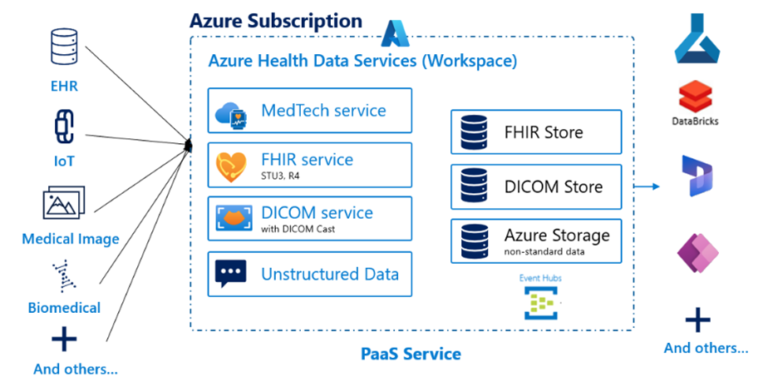
From Pilot to Authorized Production
We emphasize human-AI collaboration to create trustworthy systems: AI serves as a support layer for healthcare professionals, improving decision-making, reducing workloads, and lifting patient outcomes. The results are measurable. Our real-time data platform work with Patient First lifted wellness visit bookings 32% and cut missed appointments 18%, with analytics the program could stand behind in any review.”AI is not about replacing humans. It is about empowering clinicians, researchers, and administrators to work smarter and more efficiently,” says a Corteq Solutions AI specialist.Compliance is not the tax you pay after innovation. Designed in from the start, it is what turns a demo into a durable capability. If your agency or health system is weighing where AI fits and what it will take to authorize it, our complimentary AI Readiness Assessment maps your highest-value use cases and the fastest compliant path to production. Start the conversation.


The Corteq Brief
Mission AI intelligence, monthly.
- What works in federal and healthcare AI
- Zero-trust and compliance playbooks
- Case studies with real numbers
Free. No noise. Unsubscribe anytime.

Corteq Solutions is an AI-native consultancy for federal agencies and healthcare organizations. We design, deploy, and secure LLM, RAG, and agentic-AI systems that move missions from first pilot to authorized production.
Quick Links
What We Build
Our Locations
Australia
Canada
Pakistan
United Kingdom
United States
Newsroom
Get the latest news and updates about Corteq Solutions.